
Emerging Technologies
How INflow Federal brings innovation to the warfighter.
A group of great minds working to drive the adoption of open-source, commercial best practices, and modernization in the U.S. Department of Defense. Established in 2023, INflow Labs embodies our unwavering commitment to cementing our role as a trailblazer in the realms of software development, machine learning, artificial intelligence, and cybersecurity.
The genesis of INflow Labs was fueled by our aspiration to not only compete but to set new standards in technological innovation with a focus on Artificial Intelligence and Machine Learning. Our focus extends beyond traditional research and development; we prioritize the end-user experience and practical utility in every project. This user-centric approach has been the driving force behind our development of groundbreaking concepts and prototypes, each meticulously crafted to enhance operational efficiencies.
We believe in the transformative power of collaboration. We actively seek partnerships with industry leaders, academic institutions, and government agencies to foster an ecosystem of innovation. This collaborative spirit enables us to stay at the cutting edge, ensuring that our solutions are both relevant and revolutionary.
Our projects at INflow Labs are diverse, ranging from advanced software solutions that streamline complex processes to cutting-edge AI algorithms designed to provide strategic insights. In cybersecurity, we’re not just addressing current threats; we’re anticipating future vulnerabilities, developing robust defenses to safeguard critical data and infrastructure.
As we continue to expand our research and development efforts, INflow Labs remains committed to delivering solutions that are not only innovative but also aligned with the evolving needs of the Department of Defense. It’s more than just creating technology; it’s about shaping the future of defense strategy and operations, ensuring our armed forces are equipped with the tools they need to succeed in an increasingly digital battlefield.
Our Prototypes
INflow builds applied machine-learning platforms that solve hard prediction and optimization problems in commercial, industrial, and public-sector environments. Each prototype below is a general-purpose capability; the use cases listed are representative examples, not the limits of the technology.

Problem: Conventional tracking and forecasting methods break down when an object moves fast, changes course unpredictably, and the sensor data is noisy – position errors of hundreds or thousands of feet make short-horizon prediction unreliable.
Solution: A structured state-space model (SS4) with continuous-time latent dynamics that recovers a clean trajectory from noisy inputs and forecasts where the object will be next.
Technical Architecture:
- SS4 layers with learnable time scales and Fourier kernel initialization
- 90-timestep input window → 10-position prediction horizon
- Synthetic trajectory generation: compound sine + quadratic functions
- Noise injection via random-radius spheres (250–1,500 ft deviation)
- CUDA/TensorRT GPU acceleration pipeline for embedded, real-time inference
- Multi-object instancing with track disambiguation logic
Where it Applies
Drone and air-traffic deconfliction, autonomous vehicle and robotics path prediction, satellite and orbital-debris tracking, maritime vessel monitoring, sports and broadcast object tracking, and other aerospace and government tracking applications.guidance systems that remain reliable where Monte Carlo and gradient-based methods break down.
<250ft RMSE @ 30s Lookahead
90% Denoising Accuracy
1500ft Max Noise Tolerance
Real-time Embedded GPU Inference

Problem: Manual cargo configuration causes 36+ hour delays in deployment planning with inefficient space utilization
Solution: Dual-agent Deep Double Q-Network (DDQN) system with physics-based ML validation for automated cargo optimization
Technical Architecture:
- Small-item packaging agent using epsilon-greedy exploration (ε = 1.0 → 0.01)
- Pallet-stacking agent trained on 1M+ state-action-reward transitions
- Experience replay buffer with target network updates every 10k steps
- 3D spatial reasoning with finite-element structural-integrity validation
- Poisson-based arrival simulation (5–500 pallets/day)
- RESTful integration APIs with OAuth 2.0 for existing WMS/TMS and logistics platforms
Where it applies: Freight and 3PL operations, warehouse palletization, e-commerce fulfillment, air cargo, disaster-relief and humanitarian logistics, and government and public-sector supply chains – including intermittently connected environments.
30-50% Packaging Time Reduction
20-25% Packaging Time Reduction
<5s Edge Decision Latency
36hr Storage/Retrieval Savings

Problem: Most organizations only learn someone is leaving when they resign. Retention efforts are reactive, and leaders have no way to test whether a raise, promotion, or role change would actually change the outcome.
Solution: A digital-twin platform that forecasts individual attrition risk using interpretable, coefficient-based ML, so leaders can see why someone is at risk and simulate interventions before acting.
Technical Architecture:
Where it Applies: Enterprise HR and people analytics, healthcare and nursing workforce planning, education, professional services, and large public-sector and government workforces.
0.85+ ROC-AUC Score
10K+ Concurrent Digital Twins
<3s Scenario Generation Time
36hr Risk ∆ per Grade Promotion

Problem: Organizations with high-stress roles – first responders, healthcare workers, aviation, heavy industry, public safety – typically discover burnout and stress-related attrition only after it has already affected performance and retention.
Solution: An adaptation of the digital-twin platform that surfaces early, explainable wellbeing-risk indicators at the team and organizational level, so leaders can direct support resources proactively. OBSRVR is a decision-support and workforce-planning tool; it does not diagnose or treat any condition.
Technical Architecture:
- Binary classification with regularized logistic regression + tree ensembles
- SHAP value generation for per-prediction explainability
- Time-series segmentation for cumulative risk modeling
- Integration with existing HR, operational, and survey data streams
- Singularity containerization for secure deployment
- Privacy-preserving processing designed to meet institutional review and data-governance requirements
Where it applies: Emergency services and public safety, hospital and clinical staffing, aviation and transportation, industrial and energy operations, and other high-demand government and public-sector workforces.
<0.85 ROC-AUC Score
≥ 5% Calibration Error
Real-time UIC-level Visualization
IRB Compliant Protocol
Value-Added Reseller
Learn more about the products available through INflow Federal, as how to work with INflow Federal to procure your Products and Services leveraging cloud spend through the AWS Marketplace.
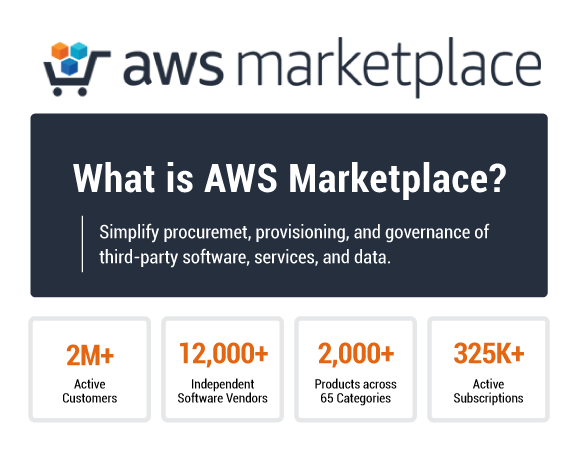
AWS Marketplace is a curated digital catalog that makes it easy for customers to find, buy, deploy, and manage SaaS products. Leverage the AWS Marketplace to enable cloud users to rapidly and securely deploy solutions, while reducing Total Cost of Ownership (TCO), and improving operational oversight.
INflow Federal & AWS Marketplace
Learn more about working with CPPO Consulting Partners in the AWS Marketplace.